

Texture, temperature, pressure, shape, and resistance.
01
WonderSprig Family Learning Journal
Sensory Play Guide
Touch. Notice. Repeat. Discover.
Sensory play gives children a direct way to investigate the world. Texture, weight, movement, sound, shape, resistance, color, and repetition become materials for discovery when children are given enough time and room to explore them at their own pace.
01 / 05
The goal is not constant stimulation. Thoughtful sensory play is often simple, repeatable, calm, and open enough for a child to make the next decision.
Pouring, stacking, balancing, carrying, and arranging.
Soft sounds, rhythm, repetition, and cause and effect.
Color, pattern, contrast, size, sequence, and change.
Combining materials and turning exploration into ideas.
A Gentler Approach
Make curiosity tangible.
Sensory play can be quiet or active, tiny or expansive. What matters most is creating a clear invitation and then leaving enough openness for the child to investigate it in a personal way.
Start with one clear invitation.
A tray of textured pieces, a small set of stacking objects, a simple sorting game, or a soft material to shape can be more inviting than an overflowing activity table. Children can see where to begin without being told exactly where to finish.
Let repetition do useful work.
Pouring again, rebuilding the same tower, matching the same pieces, tracing the same shape, or repeatedly moving an object through a track can help a child notice small differences that are easy for adults to miss.
Follow engagement, not performance.
Sensory play does not need a perfect finished result. Watching, touching, rearranging, testing, pausing, and returning are all part of exploration. The process often carries more value than making something look complete.
Keep the surroundings visually calm.
A limited palette of materials, an uncluttered tabletop, reachable storage, and a defined play surface can make an activity easier to understand and easier to return to later.
A good sensory invitation feels less like instruction and more like a question a child can answer with their hands.
Sensory Play Paths
Five ways to explore.
Instead of searching for one perfect sensory activity, build a varied mix. Some experiences can be calming and repetitive while others invite movement, experimentation, creative expression, or collaborative problem solving.
PATH 01
Texture & Touch
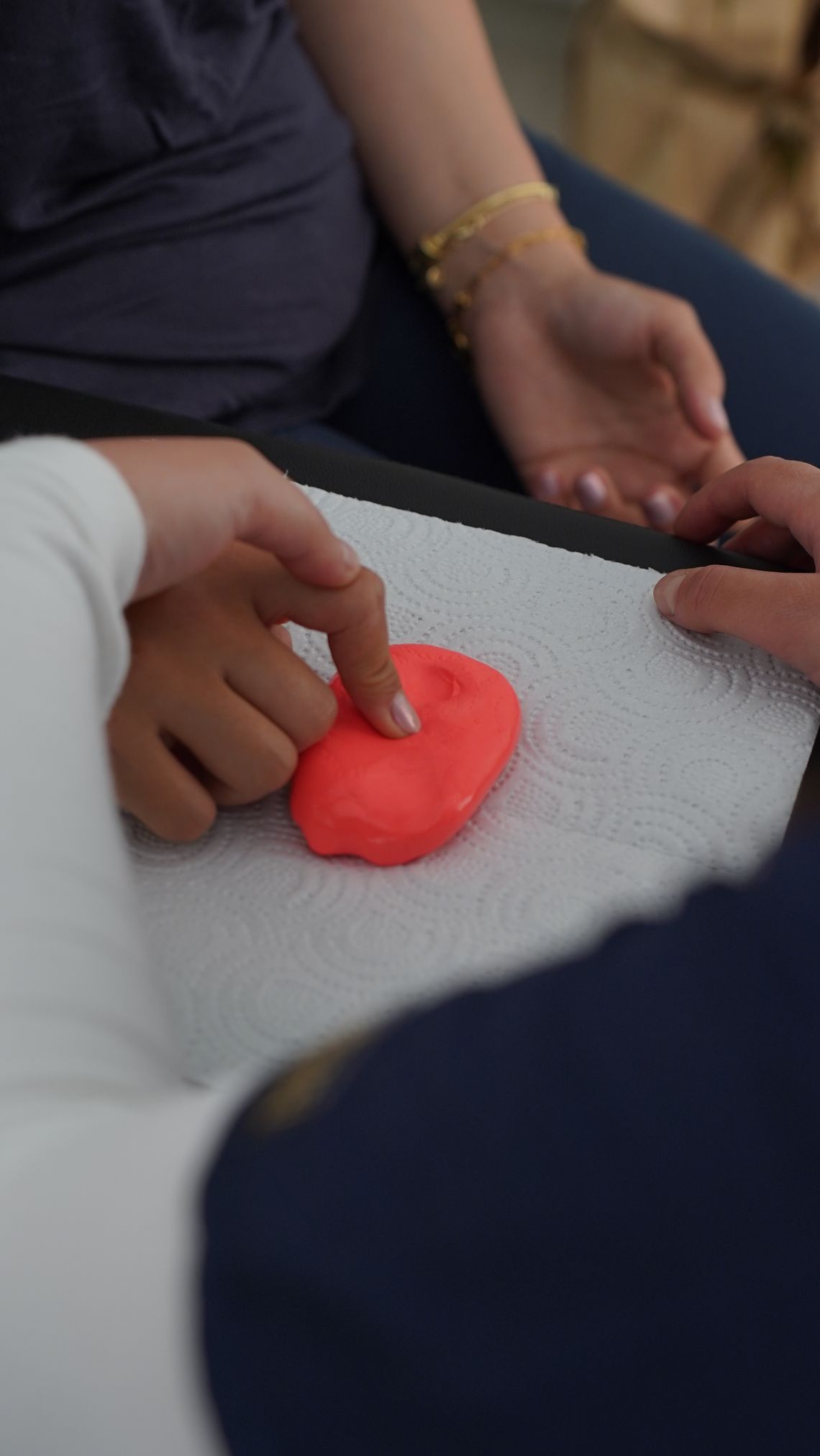
Give children contrasting surfaces and materials they can press, roll, squeeze, arrange, compare, and describe through direct contact.
Plan a tactile station
PATH 02
Pour & Transfer
Scooping, transferring, nesting, and moving materials between containers turn simple motions into focused experiments with volume, control, and sequence.
Find the right moment
PATH 03
Sort & Pattern
Color, size, shape, sequence, and grouping turn visual differences into a hands-on puzzle.
Choose thoughtfully
PATH 04
Build & Balance
Stacking, connecting, balancing, and rebuilding lets children feel weight and resistance while experimenting with simple spatial relationships.
Connect the play space
PATH 05
Make & Imagine
Clay, drawing materials, craft pieces, color arrangements, and open-ended objects let sensory investigation become creative expression. Children can move from noticing how something feels to deciding what it might become.
Adapt as children grow
Observe Before Adding More
01
02
03
04
Watch what keeps them engaged.
The most useful clue is often already visible. Notice what a child repeats, what makes them slow down, what they combine spontaneously, and what they return to without being prompted. Those patterns can guide the next activity more effectively than constantly introducing something new.
Notice the action.
Are they stacking, squeezing, sorting, lining up, drawing, pouring, balancing, spinning, or rebuilding?
Notice the pace.
A child may want slow repetition one day and a more active challenge the next. The same material can support both.
Add one small variation.
Introduce a different container, texture, color, tool, size, or rule rather than replacing the whole activity.
Leave room to return.
Familiar materials often become more interesting as children discover new uses for them.
The 15-Minute Setup
Build a calmer play station.
A sensory area does not need to fill a room. One defined surface, a small number of materials, visible storage, and an easy reset routine can create a station that works in everyday family life.
Define the Surface
Choose one tabletop, tray, mat, child-sized desk, or floor area so the activity has a clear visual boundary.
- Keep the active area easy to see.
- Leave working space between materials.
- Avoid covering every available surface.
Limit the Materials
Start with a small set that offers meaningful contrast rather than many unrelated objects competing for attention.
- Two or three textures.
- A few shapes or colors.
- One clear tool or container.
Make Access Simple
Use visible bins, desk organizers, or low shelves so children can understand where materials belong before and after play.
- Keep favorites within reach.
- Separate active and stored materials.
- Make cleanup visually obvious.
Protect the Reset
A five-minute reset can preserve the calm look of the room and prepare the activity for another day.
- Return pieces to one home.
- Remove finished materials.
- Leave the next invitation simple.
Follow the Daily Rhythm
Match play to the moment.
Families do not need a rigid sensory schedule. It can be more useful to match the scale and energy of the activity to the natural rhythm of the day.
Morning
Gentle entry
Begin with familiarity.
Put out a quiet activity children already understand, such as sorting pieces, simple stacking, tactile objects, or a small puzzle. Familiar repetition can offer an easy way to settle into the day.
Midday
Active discovery
Add movement and challenge.
Transfer games, building activities, balancing tasks, larger sensory materials, or simple STEM exploration can suit a time when children have more energy to move and experiment.
Creative
Open expression
Turn sensation into making.
Clay, drawing, craft materials, easels, shapes, and color arrangements give children a place to translate tactile and visual discoveries into their own creations.
Evening
Slower finish
Reduce the number of choices.
A familiar tactile toy, a family puzzle, quiet drawing, or a simple organization activity can create a more contained ending to the day than introducing a complex new challenge.
Two Useful Modes
Quiet play. Active play.
Sensory play does not need one fixed energy level. Keeping both quiet and active options available helps families choose an experience that better fits the child, the room, and the moment.
Quiet Sensory Play
Small-scale activities can create longer moments of concentration without requiring a large setup or a lot of movement.
- Matching and sorting pieces
- Texture comparison
- Clay and soft modeling materials
- Threading and arranging
- Simple puzzles
- Drawing and mark making
- Quiet stacking
Active Sensory Play
Larger motions and more physical experimentation can give children opportunities to explore space, movement, balance, weight, and cause and effect.
- Large building pieces
- Movement-based challenges
- Carrying and transferring
- Balancing objects
- Large-format easel work
- Collaborative construction
- Hands-on STEM activities
Supporting the Experience
Give every material a home.
Sensory play works more naturally when the physical environment supports it. Child-friendly furniture, organized materials, visible books, and defined creative surfaces can make independent exploration easier to begin and easier to reset.
Sensory Toys
Tactile, manipulative, and repeatable play objects can create opportunities for touching, moving, sorting, comparing, and experimenting.
Desk Organizers
Keep small materials visible and contained so children can understand where tools belong and adults can rotate activities without creating visual clutter.
Kids Desks & Chairs
A child-scale work surface creates a consistent place for puzzles, clay, sorting, drawing, building, and other hands-on activities.
Teaching Easels
Vertical creative surfaces let children experiment with larger hand movements, drawing, color, storytelling, and collaborative mark making.
Puzzles & Games
Pieces that can be held, matched, rotated, arranged, and repositioned bring touch and visual problem solving into the same experience.
Arts & Crafts
Paper, drawing tools, modeling materials, and creative projects help children turn sensory observations into shapes, stories, colors, and personal ideas.
STEM Activities
Building, testing, adjusting, observing movement, and comparing outcomes connect hands-on discovery with early scientific thinking.
Adapt the Invitation
Let the challenge grow.
The same sensory idea can evolve as children become more confident. Rather than replacing familiar materials immediately, try adding complexity to how they can be used.
Keep choices simple.
Focus on clear contrasts, larger pieces, straightforward movements, and plenty of room for repetition.
- Large shapes
- Basic stacking
- Simple sorting
- Soft modeling
- Easy-to-grasp tools
Add combinations.
Introduce materials that can be mixed, sequenced, balanced, grouped, transformed, or used in more than one way.
- Pattern building
- Texture combinations
- Multi-step crafts
- Building challenges
- Collaborative games
Introduce questions.
Invite children to predict, compare, design, explain, modify, and test their own approaches instead of following only one sequence.
- STEM experiments
- Strategy games
- Open-ended design
- Creative storytelling
- Self-directed projects
Choose with Intention
Keep the invitation clear.
A thoughtful sensory setup balances curiosity with practical family needs. The activity should feel understandable, manageable, and suitable for the child who will be using it.
Choose age-appropriate materials.
Consider the size, complexity, moving parts, and intended use of every activity, and follow the manufacturer's age guidance and product instructions.
Supervise when appropriate.
Some materials and activities call for closer adult involvement. Stay nearby when the activity, child's age, or individual needs make supervision appropriate.
Watch the child's response.
Children have different preferences for texture, noise, movement, mess, and intensity. If an experience seems uncomfortable or unwelcome, reduce the intensity or choose a different activity.
Keep the environment manageable.
Limit the number of available materials, use defined play zones, and store extra pieces away from the active work area to reduce unnecessary visual competition.
Make cleanup part of the design.
Storage that children can see and understand makes resetting the space easier and helps sensory play fit more naturally into everyday family routines.
Rotate instead of accumulating.
Keep a smaller selection visible and bring stored activities back later. Familiar materials can feel fresh again after a break without requiring constant new purchases.
WonderSprig Service
Family-friendly from cart to home.
Our store experience is designed to stay straightforward after you choose the right learning and play materials for your family.
Customer Support
Assistance is available around the clock for order and store questions.
Shipping Cost
All WonderSprig products ship free across our U.S. storefront.
Business Days
Orders are delivered within an estimated three to five business days.
Day Returns
Free returns and exchanges are available within 30 days.
Family Questions
Sensory play, simplified.
Practical answers for building calmer, more manageable sensory play experiences at home without turning everyday play into a complicated program.
What is sensory play?
Sensory play is hands-on exploration that involves qualities such as texture, movement, sound, shape, color, weight, resistance, or spatial relationships. It can be as simple as stacking wooden pieces, shaping clay, sorting objects, drawing on an easel, or transferring materials between containers.
Does sensory play need special equipment?
No. Many useful sensory experiences begin with simple, familiar materials. Purpose-designed sensory toys can add variety, but an organized surface and a thoughtful selection of materials are often more important than having a large amount of equipment.
How long should a sensory activity last?
There is no single required length. Let the child's engagement guide the session. Some activities may hold interest for only a few minutes, while familiar materials can sometimes support much longer periods of concentrated play.
What if my child keeps repeating one action?
Repetition can be part of exploration. A child may be noticing what changes, refining a movement, practicing a sequence, or simply enjoying a predictable result. You can let the pattern continue and later introduce one small variation.
How can I keep sensory play from becoming cluttered?
Use one defined surface, limit the number of active materials, keep extra pieces stored nearby, and make containers easy to understand. Desk organizers, low shelves, baskets, and child-sized work areas can help create a visible reset system.
What if my child dislikes a certain texture or activity?
Children have individual preferences. Avoid forcing an experience that appears uncomfortable. You can reduce the intensity, offer a tool that creates some distance from the material, or choose a different sensory pathway entirely.
Can sensory play work in a small home?
Yes. A tray on a table, one organized desk, a compact easel, or a small basket of tactile materials can create a clear play invitation without requiring a dedicated playroom.
How often should I rotate sensory activities?
Rotate when interest has noticeably faded rather than following a strict calendar. Keeping a few favorites available while changing one or two supporting materials can provide novelty without removing the comfort of familiarity.
Can sensory play connect with STEM activities?
Yes. Building, balancing, comparing weight, observing movement, testing materials, creating patterns, and changing one part of a structure are all hands-on ways to combine sensory exploration with early scientific thinking.
How quickly does WonderSprig deliver orders?
WonderSprig orders are delivered within an estimated 3–5 business days. Shipping is free on all products.
What is the WonderSprig return policy?
WonderSprig provides free returns and exchanges within 30 days. Customer support is also available 24/7 if you need help with an order or store-related question.
Start Small
Create room for discovery.
Choose one material worth touching, moving, sorting, building, or transforming. Give it a clear place, leave enough time for repetition, and let the next idea come from the child. A thoughtful sensory routine can grow from there without making the home feel crowded or the experience feel overly structured.